
What Is Hard Water
Hard water means your water contains more dissolved calcium and magnesium than softer water. In a lab report, you will usually see this shown as total hardness, often written as mg/L as CaCO3. That may look technical at first, but the everyday meaning is simple. When your water is hard, you may start seeing white marks on taps, scale on shower heads, soap that does not lather well, and mineral buildup inside water using appliances.[1][2][5]
If you are dealing with rough hair after a shower, dry feeling skin after a bath, marks on bathroom fittings, or repeated scale in your geyser, you are not imagining things. Hard water can create real daily frustration at home. This page helps you understand what it is, what it is not, and what you should check before you spend money on a fix.[1][5]
What Hard Water Really Means
Hardness mainly comes from calcium and magnesium dissolved in water. Some hardness is linked to bicarbonates. You may hear this called temporary hardness. Some hardness is linked to salts such as chlorides and sulphates. You may hear this called permanent hardness. These terms matter because heat can change how some minerals behave. That is one reason kettles, geysers, and heating elements often show the problem early.[6]
You do not need to become a chemist to use this information. You only need to know this. Hard water is not just a number on a report. It can affect how your water feels, how your bathroom looks, and how often you need to clean or maintain things at home.[1][6]
Why It Matters in Daily Life
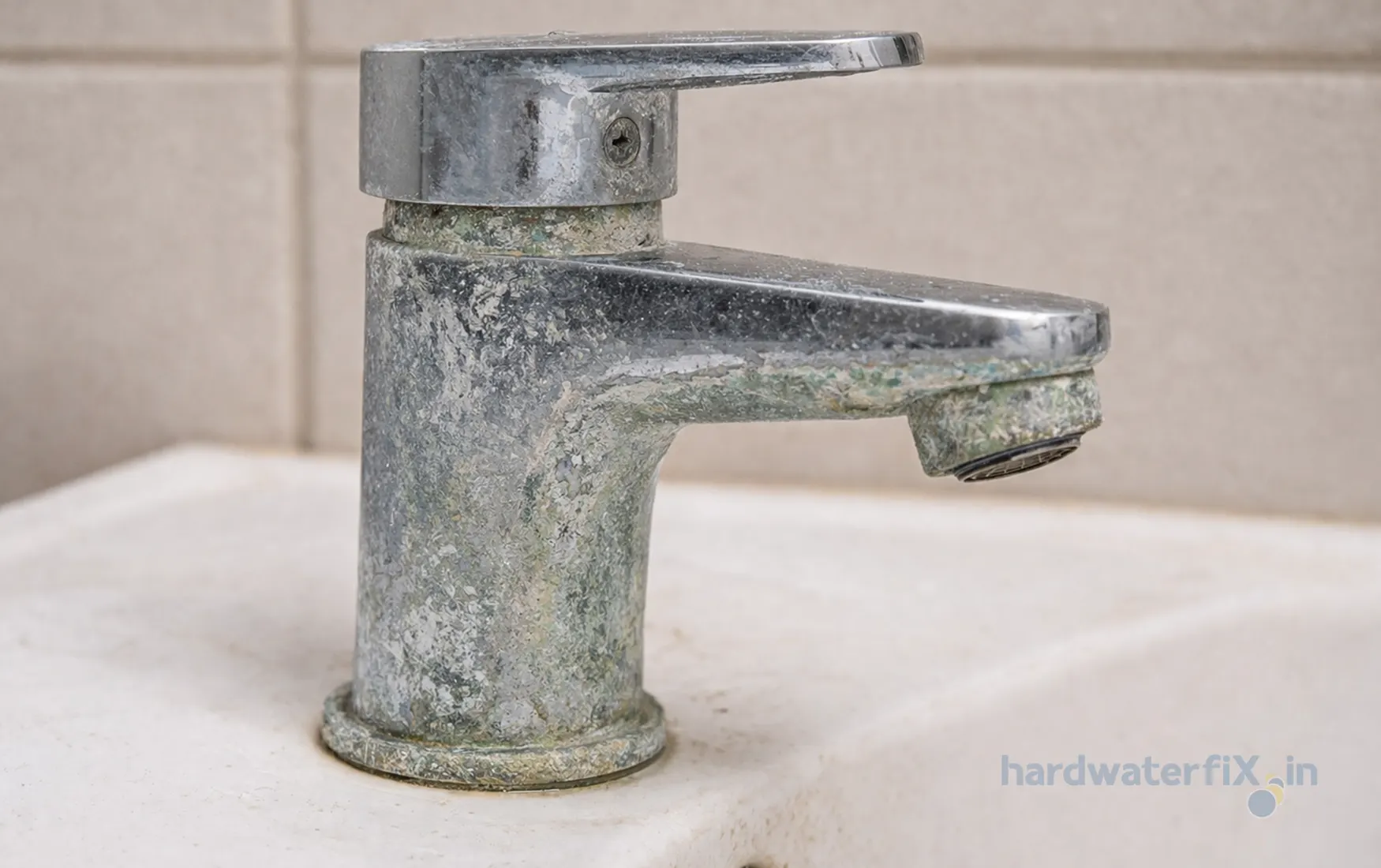
You usually notice hard water through small daily annoyances.
- You may see chalky marks on taps and tiles.
- You may notice scale on your shower head.
- You may feel like soap or body wash never lathers properly.
- You may find that your bathroom needs more scrubbing than it should.
- You may notice mineral buildup inside your geyser, kettle, or other water using appliances over time.
These are the reasons hard water matters. It is not just about a lab value. It affects comfort, cleaning, maintenance, and how your home feels to live in.[1][5]
What Hard Water Does Not Mean
Hard water does not automatically mean your water is unsafe to drink. WHO does not set a health based guideline value for hardness and does not treat hardness as a health concern at levels usually found in drinking water. That point matters because many people hear the words hard water and assume something dangerous is happening. In many homes, the main problem is usability and scale, not an emergency.[2]
That said, just because it is not usually treated as a direct health danger does not mean it does not matter. If your water keeps damaging fittings, making bathing unpleasant, or creating constant scale, you still need a clear answer and the right treatment path.[1][2]
Hardness and TDS Are Not the Same
This is where many people get pushed in the wrong direction.
You may have a TDS reading and feel like you already understand your water. In reality, TDS and hardness are not the same thing. TDS means total dissolved solids. It is a wider measure. It can include many dissolved substances in water. Hardness mainly points to calcium and magnesium. So if you only know your TDS, you still do not know your hardness.[4]
This matters when you choose treatment. If your real problem is hardness, you need the actual hardness value. If your real problem is something else in the water, your answer may be different. A TDS number by itself cannot make that decision for you.[3][4]
How You Can Read a Hardness Number
A simple guide used widely for hardness looks like this.[5]
- 0 to 60 mg/L means soft
- 61 to 120 mg/L means moderately hard
- 121 to 180 mg/L means hard
- More than 180 mg/L means very hard
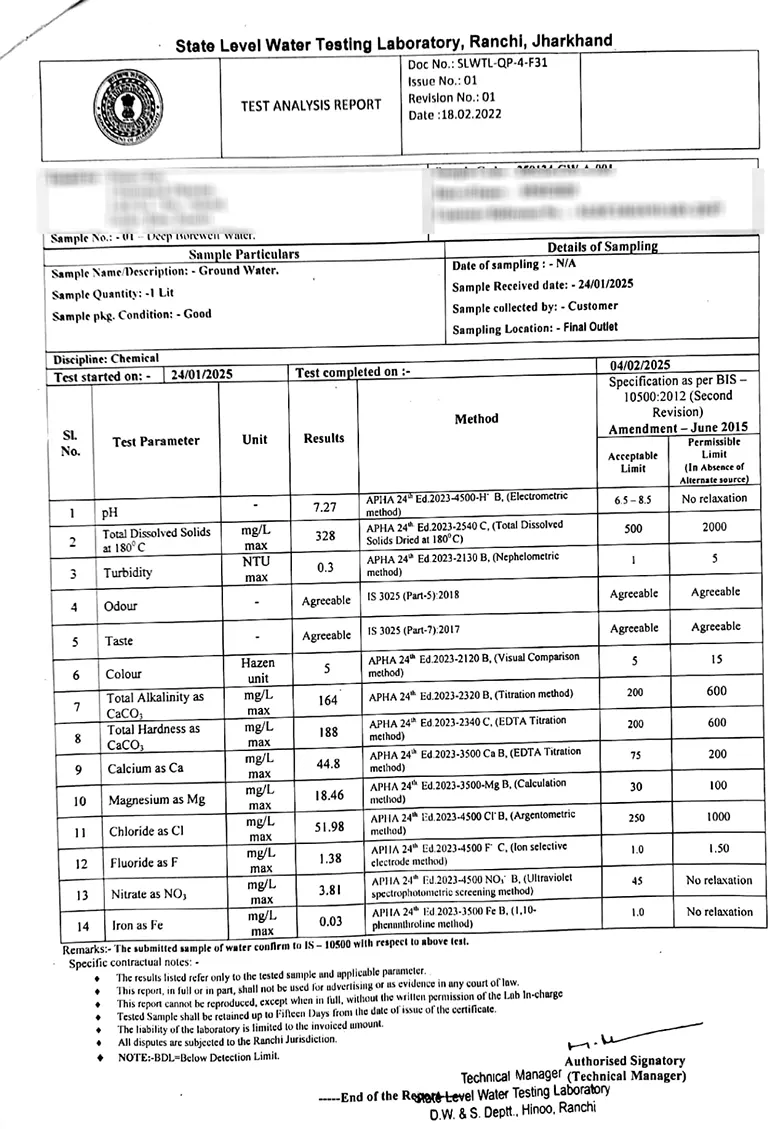
In India, BIS IS 10500 gives the drinking water reference limits for total hardness as calcium carbonate. The acceptable limit is 200 mg/L. The permissible limit in the absence of an alternate source is 600 mg/L.[3]
These values give you a useful starting point. They help you read the report with more confidence. They do not, by themselves, tell you what product to buy. You still need to connect the number to your symptoms, your water source, and where the problem shows up in your home.[3][5]
What Hard Water Can Explain
Hard water can reasonably explain a lot of common household complaints.
- It can explain scale deposits on taps and shower heads.
- It can explain white mineral marks on tiles and fittings.
- It can explain poor soap lather.
- It can explain soap scum.
- It can explain why a geyser or heating element may need more cleaning and maintenance over time.
Hard water may also be part of why your hair or skin feels different after bathing. Still, you should stay careful here. A large study found an association between domestic hard water and eczema in adults, but that does not prove hard water is the only cause of every skin complaint in every home. So the safest approach is this: treat symptoms as clues, not proof. Test first, then decide.[8][1]
What You Should Check Before You Buy a Fix
Before you buy any treatment, slow down and check a few things clearly.
- Look for visible scale on taps, tiles, or shower heads.
- Notice whether soap lathers poorly.
- Think about whether the problem shows up mainly in the bathroom, in the geyser, or across the whole home.
- Check whether your water report lists total hardness separately from TDS.
- If you do not have a report yet, start there.
This step can save you money and confusion. You do not want to buy a solution for the wrong problem.
What You Should Do Next
If you are seeing the usual signs of hard water, your best next step is not guessing and not shopping blindly. Your best next step is to test your water properly.
A useful report for this decision should show total hardness clearly. Calcium, magnesium, alkalinity, and TDS can also help you understand what is going on more clearly.[3][4]
If you do not know where to start, you can use the Jal Jeevan Mission WQMIS lab locator to find a testing route in India.[7]
A Sample Ground Water Test report
Once you know your hardness level, you can move to the next question with more confidence: Is your problem limited to one area, or is it affecting your whole home? That is the point where solution selection starts making sense.
Now it is time to move to find your fix.
Bottom Line
If you are dealing with white marks, scale, poor lather, rough shower feel, or constant mineral buildup, hard water may be a real part of your problem. Hard water means your water contains more calcium and magnesium. It is not the same as TDS. It is not usually treated as a direct health danger. Still, it can create real frustration, cleaning effort, and maintenance issues in daily life.[1][2][4][5]
So do not let the topic stay vague.
- Check the signs.
- Test the water.
- Read hardness separately from TDS.
- Then choose a fix that matches the actual problem.
Keep Reading
FAQ
WHO does not treat hardness in drinking water as a health concern at levels normally found in drinking water, and it does not set a health based guideline value for hardness. In most homes, hard water is more of a daily use and maintenance problem than a direct health danger.[2]
No. TDS is a broader measure of dissolved material. Hardness mainly concerns calcium and magnesium. A TDS number alone cannot confirm hardness.[4]
A simple common guide is this. 0 to 60 mg/L is soft, 61 to 120 mg/L is moderately hard, 121 to 180 mg/L is hard, and more than 180 mg/L is very hard, all measured as calcium carbonate.[5]
Hard water can cause mineral scale buildup in heated and water using equipment, which can affect cleaning and maintenance over time.[1]
References
- World Health Organization. Hardness in Drinking Water. Background document for development of WHO Guidelines for Drinking Water Quality. 2011. Read source ↩
- World Health Organization. Hardness. Chemical fact sheet in the Guidelines for Drinking Water Quality. Read source ↩
- Bureau of Indian Standards. IS 10500:2012 Drinking Water Specification. Second revision. Read source ↩
- World Health Organization. Total Dissolved Solids in Drinking Water. Background document for development of WHO Guidelines for Drinking Water Quality. 2003. Read source ↩
- U.S. Geological Survey. Hardness of Water. Water Science School. Read source ↩
- OpenLearn, The Open University. Understanding Water Quality. Section on natural waters and temporary and permanent hardness. Read source ↩
- Jal Jeevan Mission. WQMIS Laboratories Information. Government of India water quality laboratory locator. Read source ↩
- British Journal of Dermatology. The association between domestic hard water and eczema in adults from the UK Biobank cohort study. 2022. Read source ↩