
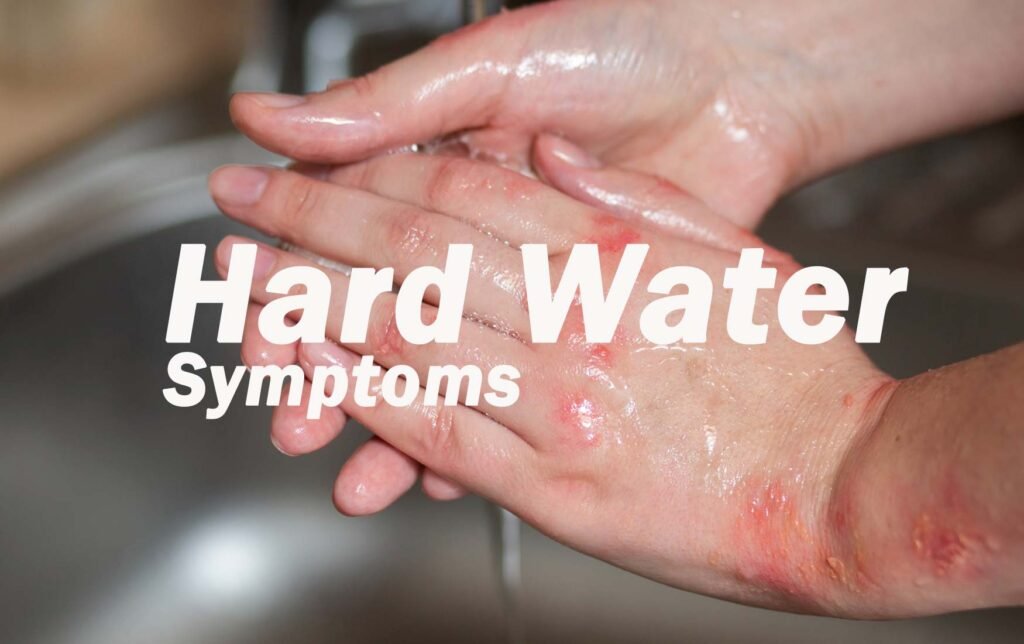
Hard Water Symptoms
Hard water usually announces itself in your home before it ever appears on a report in front of you. You may first notice white marks on taps, poor soap lather, a shower head that keeps clogging, or a geyser that collects mineral buildup again and again. Those are the signs that point most clearly toward hardness in a practical, home based way. WHO explains hardness as water that contains dissolved calcium and magnesium and notes that harder water needs more soap to produce a lather. USGS also explains that these minerals react with soap to form soap scum that can cling to surfaces and make cleaning feel more frustrating. [1][2][3]
This matters because not every bath, hair, or skin complaint gives you the same level of confidence. Some symptoms point strongly toward hard water. Some are only supporting clues. Here we separate those two groups clearly, so you do not jump to the wrong answer and buy the wrong fix. [1][2]
What Hard Water Symptoms Usually Mean
The symptoms that matter most are the ones tied directly to mineral deposits and the way hard water reacts with soap. In plain terms, the strongest clues are usually scale, soap scum, poor lather, and repeated mineral buildup in water using appliances. Hair feel and skin feel can matter too, though they should sit behind those stronger clues, not replace them. [1]
The Most Common Hard Water Symptoms at Home
1. White chalky marks on taps, tiles, glass, and buckets
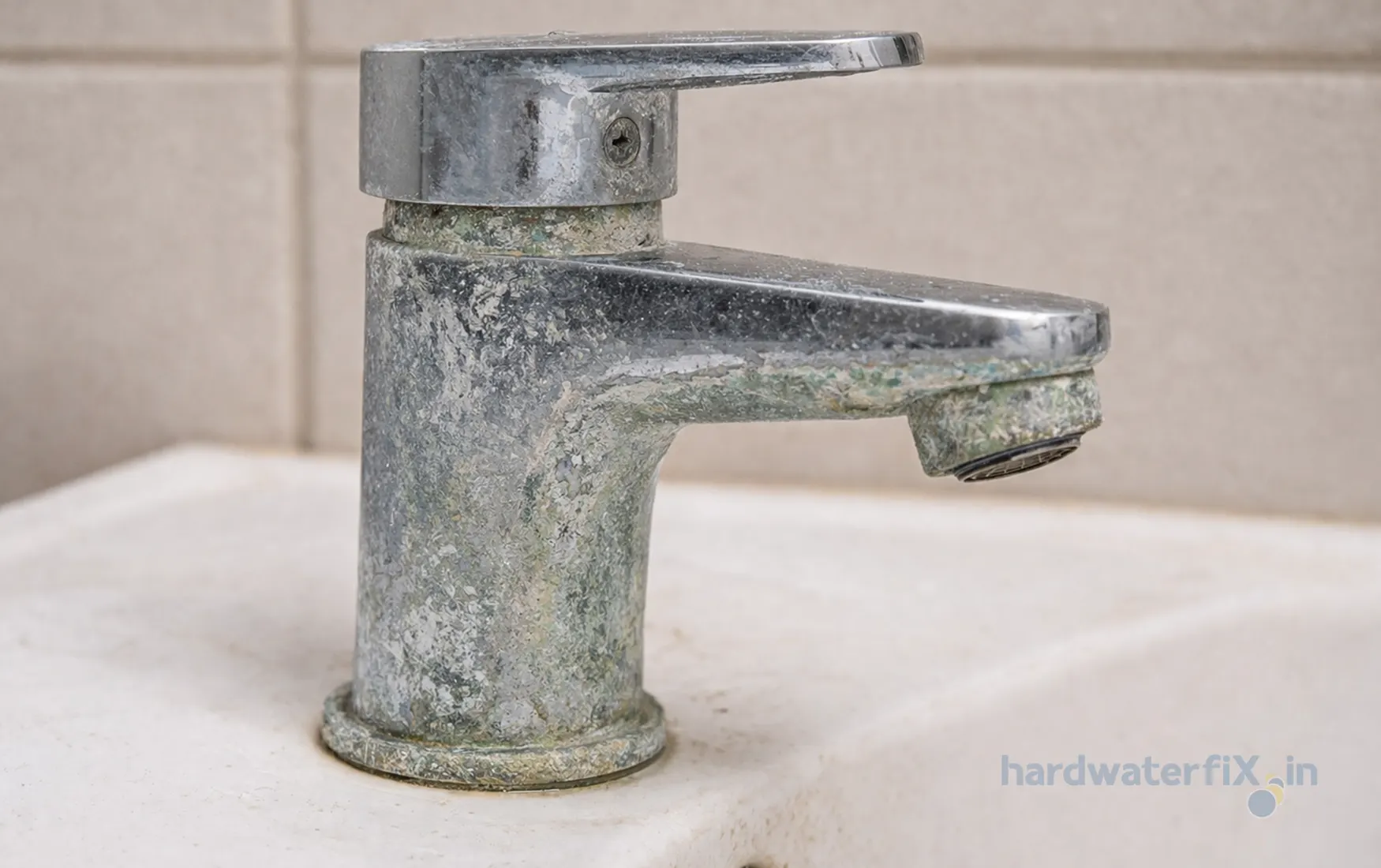
This is mineral residue left behind when water dries. If the water contains more calcium and magnesium, those minerals can stay back on surfaces and slowly build into visible scale. This is one of the clearest everyday clues that hardness may be part of your water problem. WHO links hardness with scale deposition, and that is why these marks matter more than vague complaints on their own. [1]
2. Soap that does not lather well
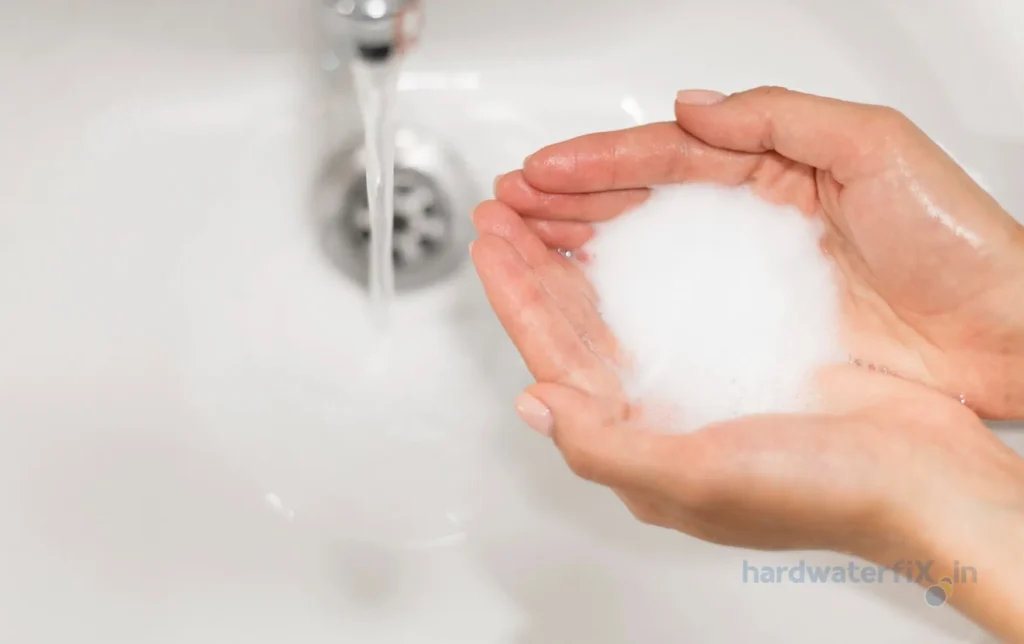
You use soap, body wash, or shampoo, but it never feels like it is working the way it should. You may use more product than expected and still feel unsatisfied with the wash. WHO describes hardness as the traditional measure of water’s capacity to react with soap, with hard water requiring considerably more soap to produce a lather. That makes poor lather one of the most useful home clues. [1]
3. Soap scum on skin, shower walls, and fittings
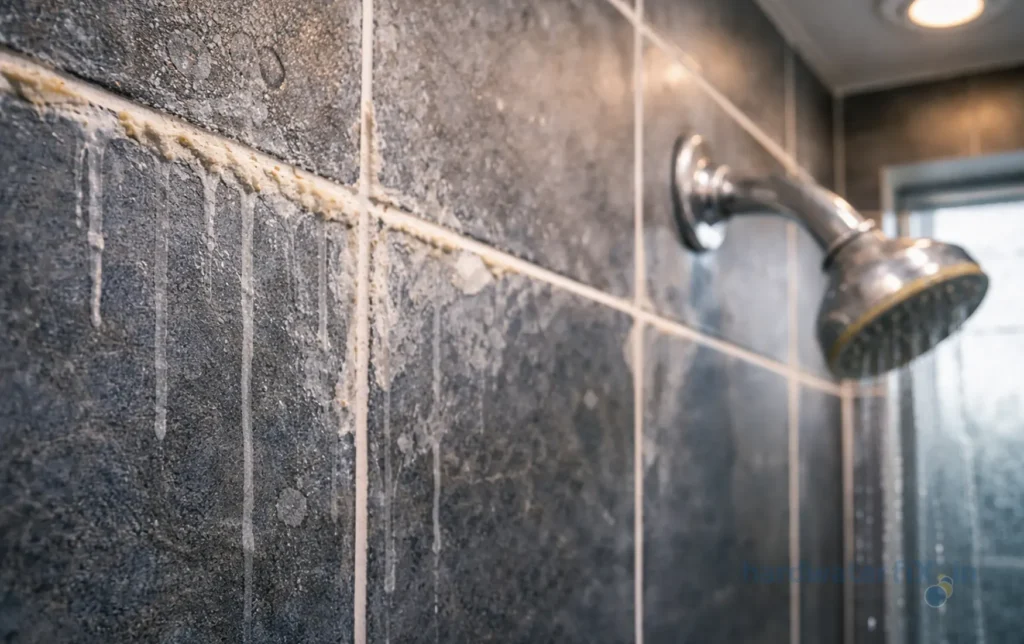
Soap scum is the residue created when minerals in hard water react with soap. USGS explains that in hard water, soap reacts with calcium and forms soap scum that can temporarily stick to your hands and to shower surfaces. This is why your bathroom may look dull or feel harder to clean even when you clean often. [3]
4. Scale on shower heads and tap aerators
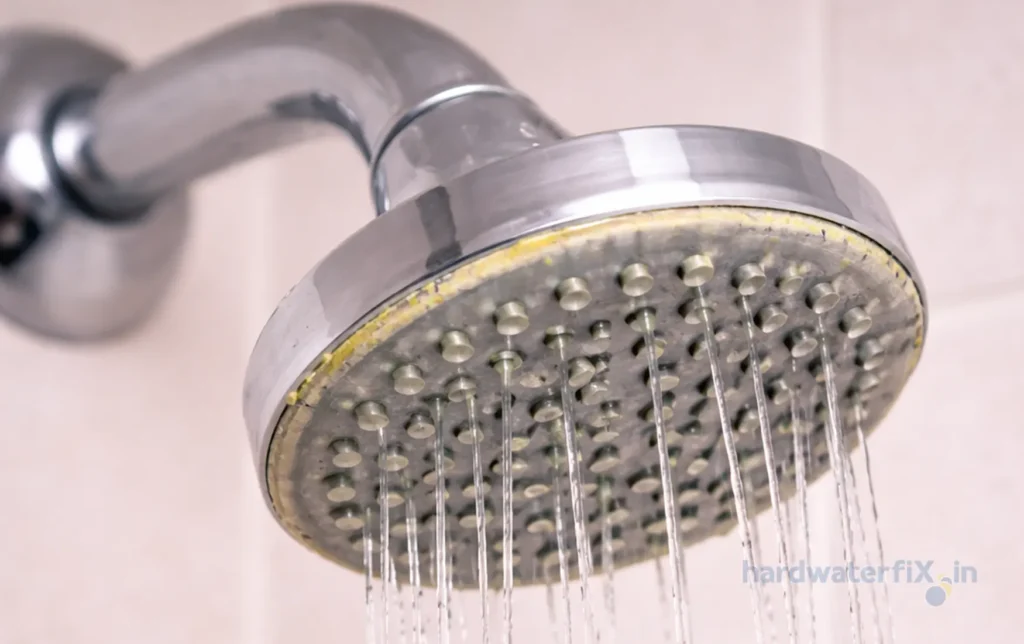
This is the crusty buildup that forms around nozzles and small openings where water passes through often. Over time, the buildup can reduce flow or make the spray uneven. It is another strong symptom because it reflects repeated mineral deposition, not just a one time mark. WHO’s background document ties hardness to scale deposition in water systems and equipment. [2]
5. Repeated mineral buildup in geysers, kettles, and heating elements
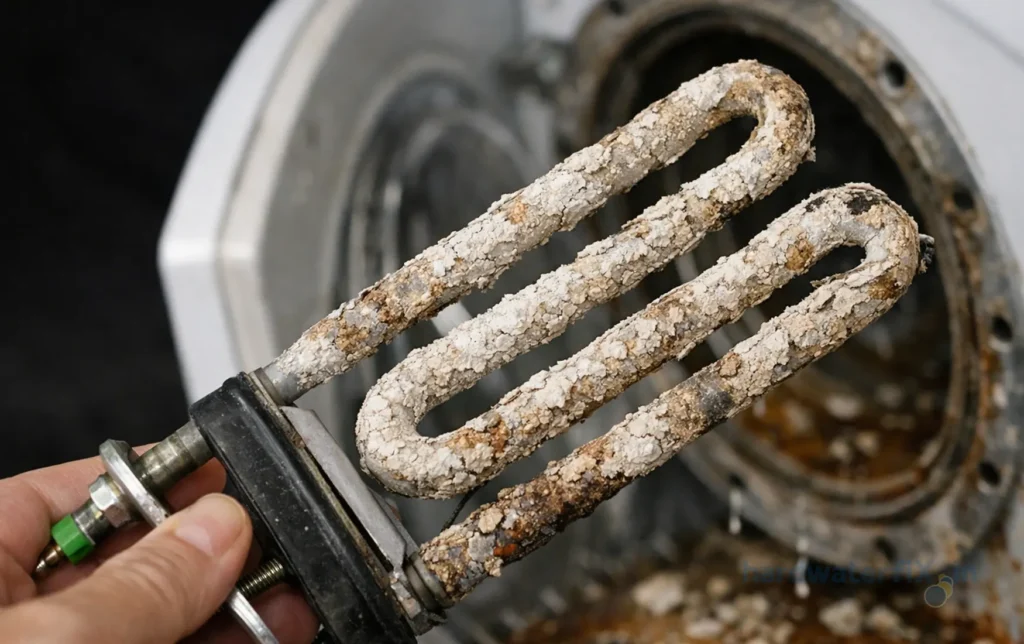
This is the scale that forms inside appliances where water is heated. Heat often pushes dissolved hardness minerals out of solution and onto the appliance surface. If your geyser or kettle keeps collecting hard white deposits, hardness becomes much more likely. WHO links hard water with scale deposition and related operational issues, especially where water is heated or repeatedly used. [2]
6. More cleaning effort in the bathroom than you expect
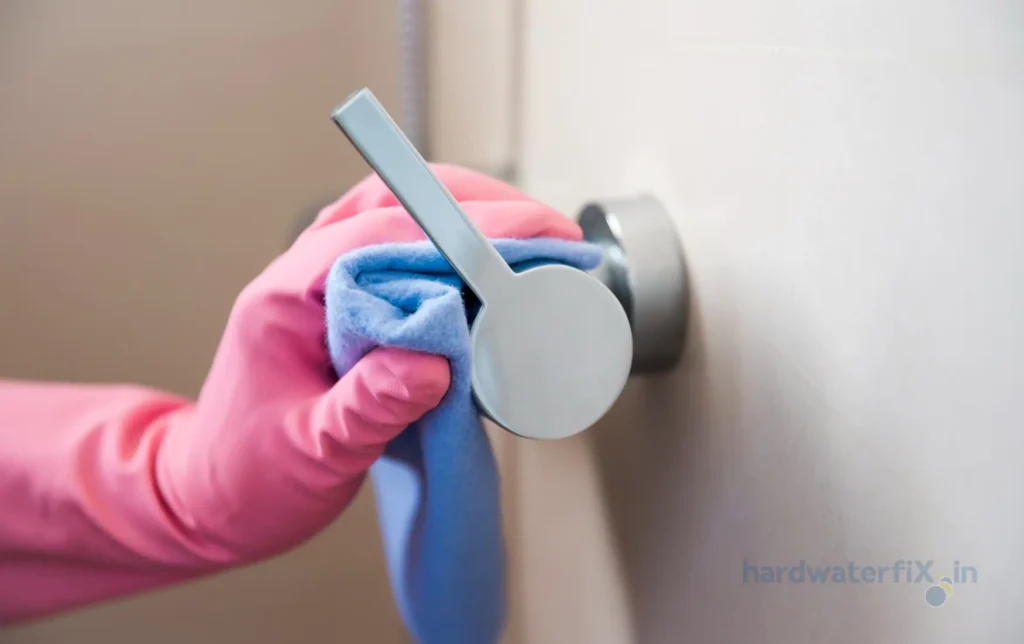
You clean, but the bathroom never seems to stay clean for long. Marks come back, taps lose shine, and glass turns spotted again quickly. This symptom is really a combination of scale and soap scum, which is why it belongs on the list. It is not as precise as a report number, though it is still a useful pattern when it appears with the stronger clues above. [2]
Symptoms That Can Happen, But Do Not Prove Hard Water On Their Own
7. Rough feeling hair after washing
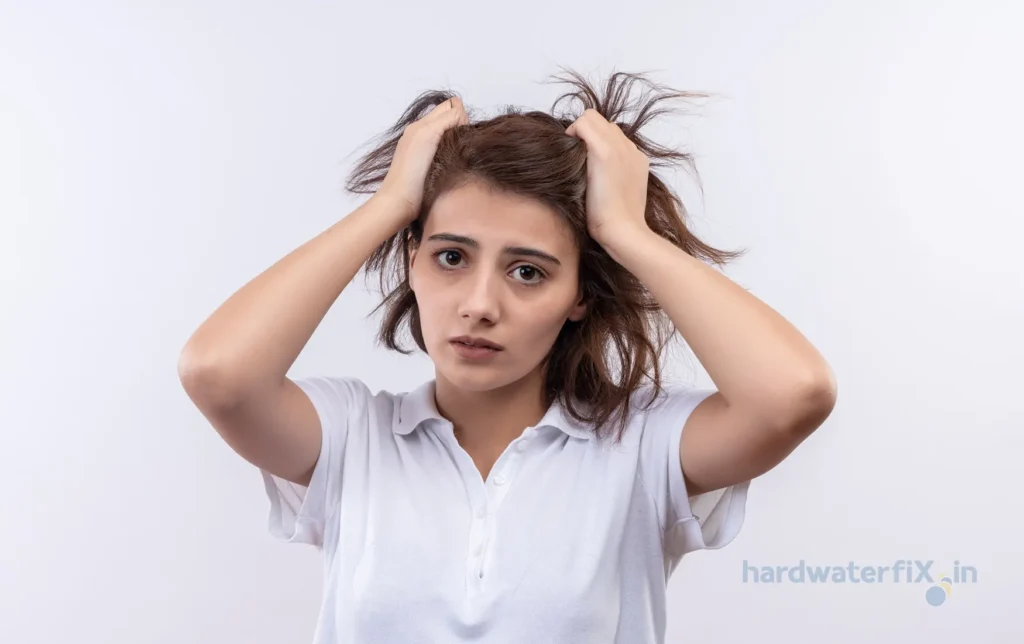
Your hair may feel coated, dull, or harder to rinse clean. This can happen in hard water conditions because soap based products and minerals may leave residue behind. A review in the International Journal of Trichology notes that bar soaps mixed with hard water can leave soap scum that is difficult to rinse from hair and scalp. Still, hair feel alone is not enough to diagnose hard water because shampoo choice, scalp condition, and hair type also matter. [4]
8. Dry, tight, or irritated feeling skin after bathing
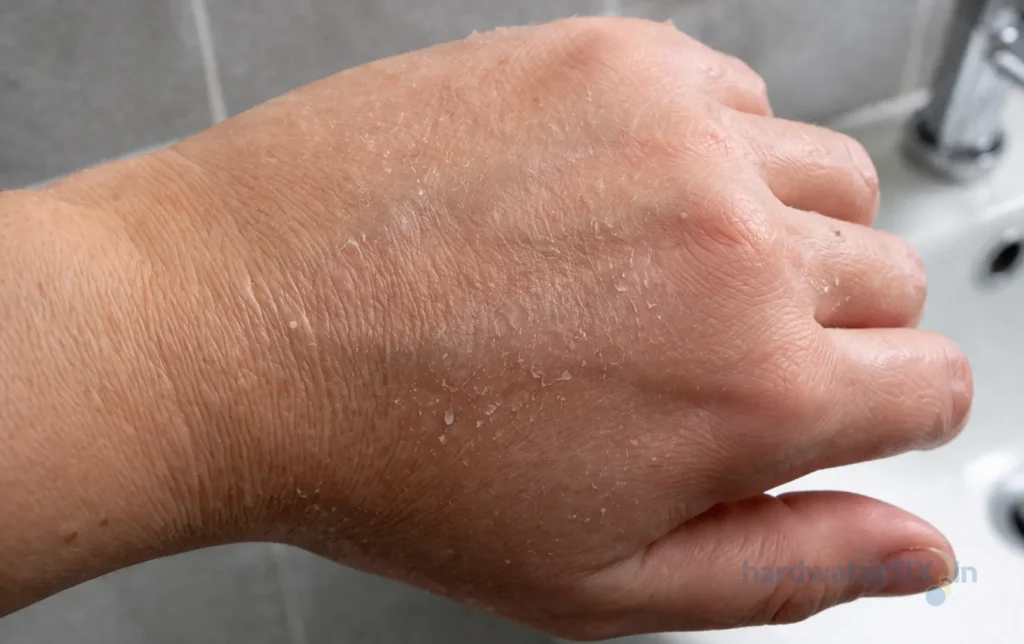
Your skin may feel less comfortable after washing. There is research showing that exposure to harder domestic water is associated with increased eczema prevalence in adults in a large UK Biobank study. Still, association is not the same as proof for every person and every home. So skin symptoms should support the picture, not carry the whole diagnosis by themselves. [5][1]
This is the practical way to think about it. Scale, soap scum, poor lather, and repeated mineral buildup are the symptoms that point most strongly toward hardness. Hair feel and skin feel can support that picture, but they should not carry the whole diagnosis on their own. [1][2][4][5]
What Symptoms Can Tell You, And What They Cannot
Symptoms can tell you that hardness is worth checking. They cannot tell you the exact hardness number. They cannot tell you whether your TDS is also high. They cannot tell you whether another water issue sits beside the hardness problem. That is why symptoms help you suspect a problem, while a report helps you confirm what you are actually dealing with. BIS lists total hardness and total dissolved solids as separate parameters, which is exactly why you should not try to diagnose everything from one symptom or one handheld reading. [6][1]
That point matters even more in India, because BIS IS 10500 treats total hardness and TDS as separate report lines with separate limits. Understand hardness versus TDS here. If your report shows only one number, or if you are only looking at a handheld meter, you still may not have enough information to choose the right fix confidently. [6]
When You Should Stop Guessing And Test The Water
If you are seeing several of these together, it is time to test instead of guessing:
- white mineral marks
- poor soap lather
- soap scum
- scale on shower heads or taps
- repeated mineral buildup in a geyser or kettle
Those signs make a hardness check worthwhile. A useful report should show total hardness separately from TDS. Under IS 10500:2012, BIS sets the acceptable limit for total hardness as CaCO3 at 200 mg/L and the permissible limit, in the absence of an alternate source, at 600 mg/L. [6]
Go to page Water Testing Guide to understand how to test your water and get useful results
If you do not already have a report, the Jal Jeevan Mission WQMIS laboratory locator gives you a public route to water testing in India. The portal also shows that many listed labs test both total hardness and TDS, which is exactly what you need for a better decision. [7]
What You Should Do Next
If your main symptoms are scale, soap scum, poor lather, and appliance buildup, hardness deserves serious attention.
If your symptoms are only about hair feel or skin feel, do not blame hardness too quickly. Look for support from the stronger clues above.
If you already have a report, check whether it separates total hardness from TDS. You can upload your water test report here.
If you do not have a report, get one before you spend money on a fix. Do check the page find the right fix for your water problem before getting the water test.
If you want help reading the result in plain language, the next useful step is to submit your water report and read it as a full picture, (we will process the water test report and will let you know the right next step) not as one guess based on one symptom. [6]
References
- World Health Organization. Hardness. Chemical fact sheet in the Guidelines for Drinking Water Quality. Read source ↩
- World Health Organization. Hardness in Drinking water. Background document for development of WHO Guidelines for Drinking Water Quality. Read source ↩
- U.S. Geological Survey. Hardness of Water and related Water Science School FAQ on soap scum and hard water. Read source ↩
- Draelos ZD. Essentials of Hair Care often Neglected: Hair Cleansing. International Journal of Trichology. 2010. Read source ↩
- Lopez DJ and colleagues. The association between domestic hard water and eczema in adults from the UK Biobank cohort study. British Journal of Dermatology. 2022. Read source ↩
- Bureau of Indian Standards. IS 10500:2012 Drinking Water Specification. Second revision. Read source ↩
- Jal Jeevan Mission. WQMIS Laboratories Information. Government of India laboratory locator and parameter listings. Read source ↩